Healthy Communities- housing, walking & biking, commerce & culture
(This page will hopefully be continually updated with new reports and information. Your support would help make this possible. Last updated February 2026.)
- The Crisis
- Zoning, Discrimination, Reforms
- Barriers
- Affordable Housing, Gentrification
- Cars, Culture, Walking & Biking
- The Hudson Valley
- Politics, Policies in Practice
- Published Papers, Studies, Data
- Additional Resources
- In Closing
The Crisis
- ‘The Death and Life of Great American Cities’ Remains Relevant Today – Streets.mn
- The root cause of America’s housing affordability crisis, as told by one housing policy analyst | Fortune
- Housing experts say there just aren’t enough homes in the U.S. : NPR
- Housing ‘affordability has just totally collapsed,’ economist says
- Housing affordability crisis is the ‘worst’ ever, former Housing and Urban Development Secretary says | Fortune
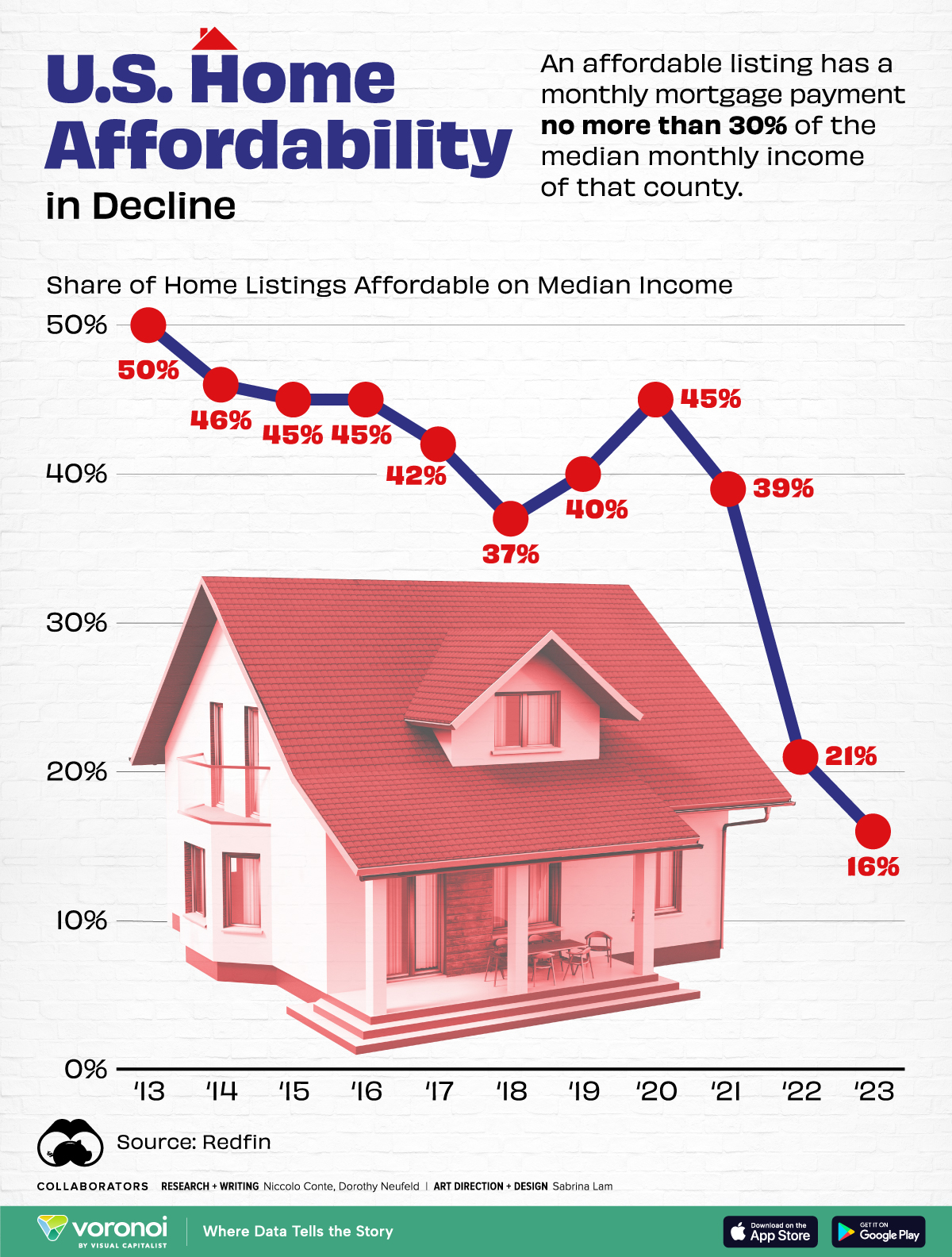
- How soaring housing costs have crushed the birth rate
- Frustrated families across the U.S. struggle to afford homes
- Meet Baby Boomer Homeowners Who Can’t Afford to Downsize in Retirement – Business Insider
- Affordable Housing Gap for Low-Income Renters – Business Insider
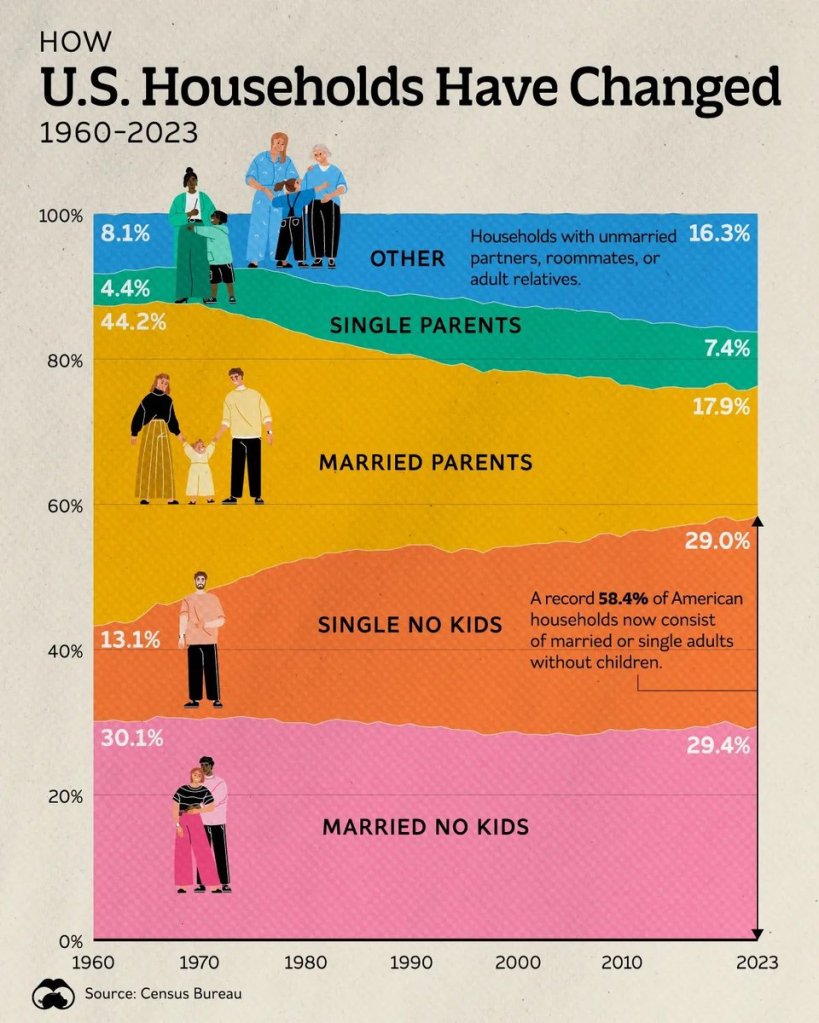
Single no kids: 220% of prior.
Married w/ kids: just 46% of prior.
Single parents: 168% prior.
We have a housing variety problem. Leaders are not meeting the demographics, and it shows repeatedly in negative ways.
- The Housing Shortage Is Hurting Almost Every Part of the Economy
- Montana town’s economy withers due to lack of affordable housing – ABC News
- The Trillion-Dollar Implications Of New York’s Housing Shortage
- Jersey City Real Estate Market Getting More Expensive As NYers Move in – Business Insider
- Where housing affordability is worst and costs are highest in the U.S.
- You Need More Neighbors – D Magazine
- How Many Homes Do We Need? – by Kevin Erdmann
- ‘Everything’s just … on hold’: the Netherlands’ next-level housing crisis | Netherlands | The Guardian
- A ‘cowboy ski town’ where high earners can’t afford a home faces a housing battle
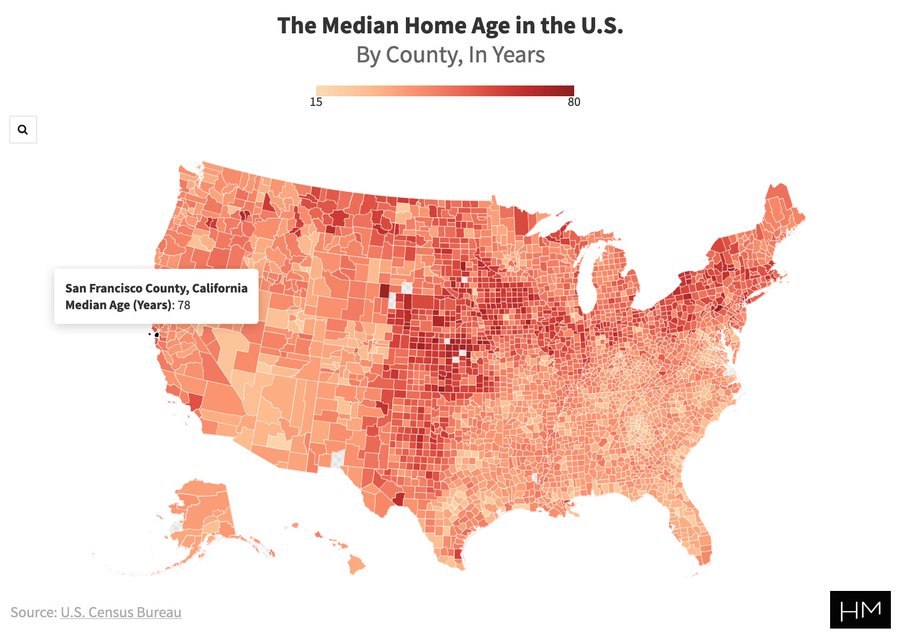
- Taking a look at Maine’s aging housing stock | newscentermaine.com
Zoning, Discrimination, Reforms
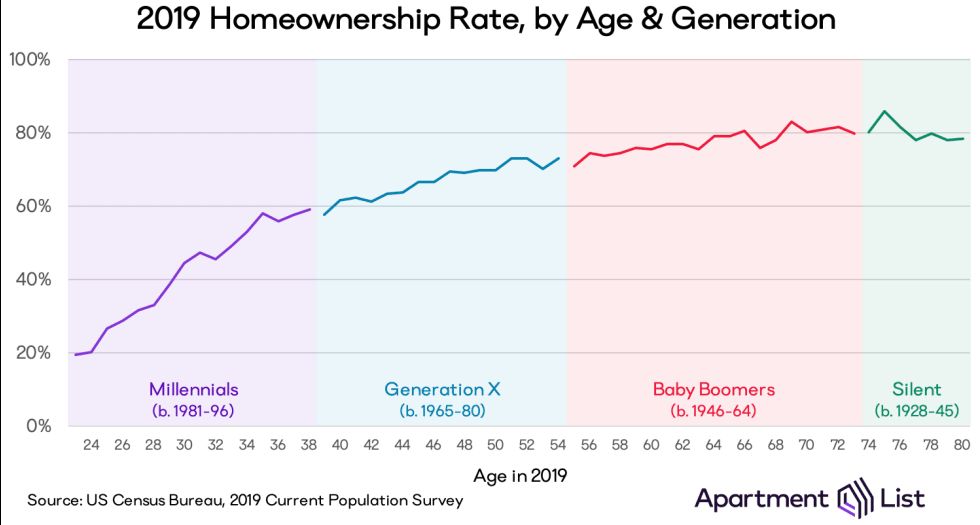
- Exclusionary by Design | Boston Indicators
- exclusionarybydesign_report.pdf
- The Racist History of Single-Family Home Zoning | KQED
- Living Apart: How the Government Betrayed a Landmark Civil Rights Law — ProPublica
- Single Family Zones Are Biggest Culprits in Displacement of Black Seattleites – The Urbanist
- Opinion | The ‘New Redlining’ Is Deciding Who Lives in Your Neighborhood – The New York Times
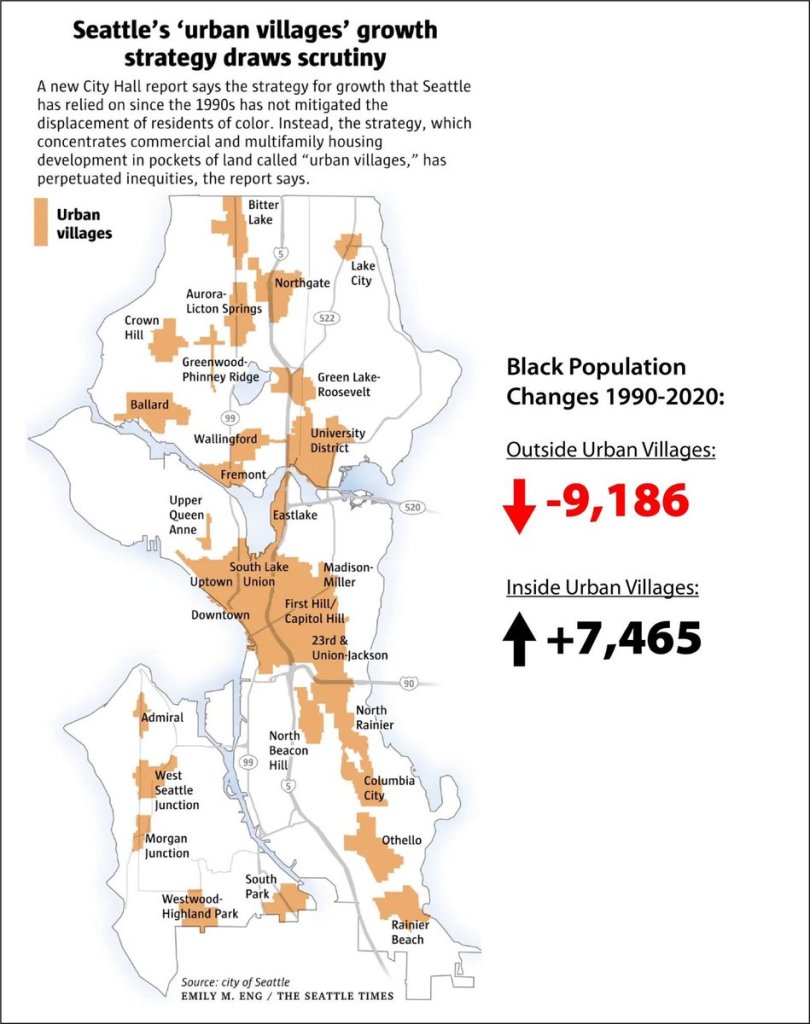
- Housing is missing on purpose
- The Constitutional Case Against Exclusionary Zoning – The Atlantic
- All for one, and none for all: Is banning single-family zoning easing the housing crisis? – The Boston Globe
- Report identifies single-family zoning as hurdle in making Tennessee’s housing market affordable • Tennessee Lookout
- Zoned out: How Oklahoma zoning laws contribute to the housing crisis | KGOU
- VIDEO: How the US made affordable homes illegal
- Columbus zoning changes overdue. Extreme minority wrong about Zoned In.
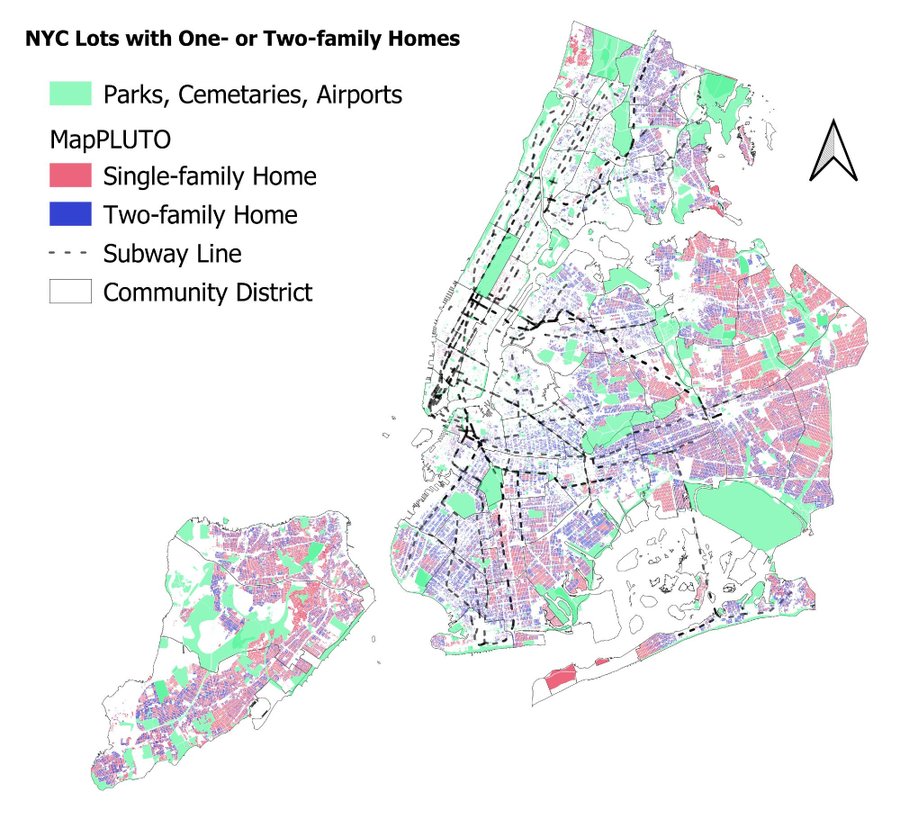
Reforms
- Why a Providence city councilman wants to rezone hundreds of properties
- Brookings- Diverse neighborhoods are made of diverse housing
- ZAP Commission forwards recommendation allowing some commercial uses in residential zones – Austin Monitor
- Corner Stores Mount a Comeback in Residential Neighborhoods – Bloomberg
- Affordable Housing — in the Backyard – The Current
- Denver ADUs legalized citywide. How many could be built?
- Small Single-Stairway Apartment Buildings Have Strong Safety Record | The Pew Charitable Trusts
- Single-stair reform has energized North American architects
- What Happened When Buffalo Changed Its Parking Rules — Streetsblog USA
- Proposal to Abolish Single-Family Zoning in Cambridge Moves Forward | News | The Harvard Crimson
- Dispelling myths: Reviewing the evidence on zoning reforms in Auckland – ScienceDirect
- City of Seattle Prevails Against Housing Growth Plan Appeals – The Urbanist
- Columbus City Council approves major zoning changes to applause
- From Paris to Cleveland, 15-Minute City Book Charts the Concept’s Rise – Bloomberg
- Priced Out of Housing, Communities Take Development Into Their Own Hands – The New York Times
- Small Single-Stairway Apartment Buildings Have Strong Safety Record | The Pew Charitable Trusts
- Six housing ideas that can help tackle the housing crisis | Vox
- A new kind of public housing for all income levels : NPR
- Why Dense Housing is Green Housing – Redfin Real Estate News
Inclusionary Zoning and Rent Control, Point/Counterpoint
- Inclusionary Zoning Is Failing Low-Income Residents, Expert Has Solution – Business Insider
- Editorial: Separate unconstitutional ‘inclusionary zoning’ from better land-use reforms | Pittsburgh Post-Gazette
- To Fix Inclusionary Zoning, Fund It | Sightline Institute
- Netherlands Rent Controls Deepen Housing Crisis – Bloomberg
Barriers
“Local interest groups and affluent homeowners wield environmental reviews and zoning restrictions as tools of exclusion, stalling new developments under the guise of community protection…The result? A housing crisis that grows worse every year. Families are priced out, homelessness rises, and younger generations are left struggling for stability—all while the people most invested in maintaining this broken system are the ones who already own their homes. The political generation that once championed reform now often stands in the way of the changes necessary to make their cities livable for the next.”
Boomers Love Progress—Until It Moves Next Door
- The Housing Crisis Is Breaking People’s Brains – The Atlantic
- The problem with Poolesville – by Matthew Yglesias
- Wealthy suburbs are crushing housing market supply and choking off affordability | Fortune
- Systemic Barriers – AARP Future Of Housing
- Resisting Change In The Name Of “Community Character” Is Actually Destroying It
- Neighborhood Character and Redlining’s Legacy – Streets.mn
- ‘Community Character’ Concerns Are a Veil – a Thin One
- Housing is missing on purpose
- Liberal Voter Signs Petition to Build More Affordable Housing Two Towns Over, Maybe Three

- Flipping Out: How Home Flipping Reduces Affordability in NYC Neighborhoods of Color ← Pratt Center For Community Development
- Jane Jacobs and the Death and Life of American Planning
- One Man’s Quest to Fix San Francisco’s Housing Crisis – The Atlantic
- Why it’s time you stopped hating property developers
- What I learned from covering California’s homeless since 1980 – Los Angeles Times
- Metro will study infrastructure improvements needed to reform residential zoning
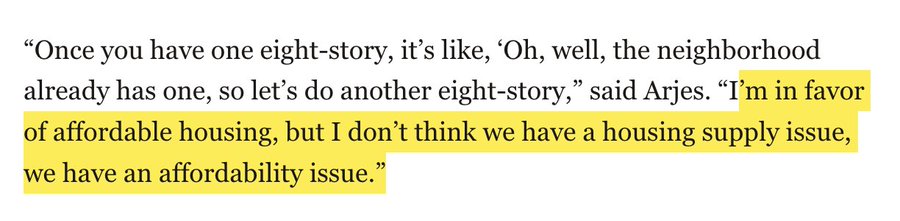
- Long Island Town of Huntington Says No to More… | New York Focus
- Rhode Island town uses eminent domain to stop private affordable housing project
- Wealthy NJ town rejects plan to convert office into housing for homeless families – Gothamist
- Residents rage after Great Highway development grows
- Berkeley Council Scales Down Major Housing Reform of Single-Family Zoning | KQED
- Old Town Neighbors Oppose Apartment Tower Plan Despite Positive Traffic Study Results
- Minneapolis’ YIMBY Success Story Halted by Environmentalist Lawsuit
- Hawaii Gov. Josh Green Backtracks on YIMBY Emergency Order
- How Steamboat Springs voters shut down affordable housing
- Shelton residents voice shock as Mohawk Drive apartment plan advances
- Confronting the Challenges of “Not in My Backyard (NIMBY)” Attitudes | NAHB
Affordable Housing, Gentrification
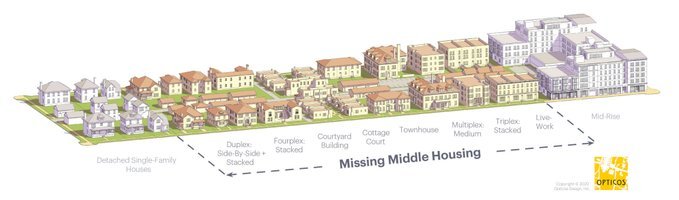
- Missing Middle Housing
- How Even Luxury Housing Can Help Solve the Housing Shortage
- Building subsidized low-income housing actually lifts property values in a neighborhood, contradicting NIMBY concerns
- Does Building New Housing Cause Gentrification? – Bloomberg
- Affordability Gaps – AARP Future Of Housing
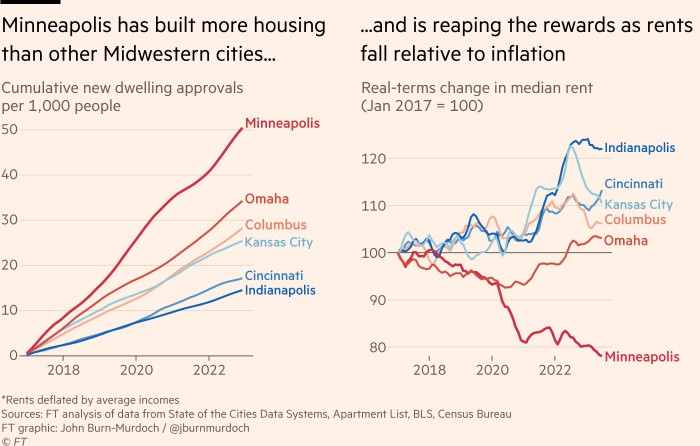
- A Charter for Housing Equity: Five Reforms for a Fairer and More Affordable NYC
- VIDEO: Can luxury housing do anything for homelessness?
- Netherlands Rent Controls Deepen Housing Crisis – Bloomberg
- NYC is adding more affordable apartments than ever. But who are they meant for? – Gothamist
“As an affordable housing developer, each dollar saved on constructing parking could go towards building more housing for the lowest-income New Yorkers.”
Op-ed: Removing parking mandates is a plausible trade off to increase affordable housing
- US rents decline, Texas sees big drops in long term trend
- Austin Rents Tumble 22% From Peak on Massive Home Building Spree – Bloomberg
- Op-ed: Removing parking mandates is a plausible trade off to increase affordable housing
- Japanese Housing Policy… – UCLA Housing Voice – Apple Podcasts
The Squamish Nation, Vancouver
- Vancouver’s new mega-development is big, ambitious and undeniably Indigenous – Macleans.ca
- A Multi-Billion Dollar Real Estate Project Is Rising on Native Reserve Land in Vancouver | Architectural Digest
“Vacancy Chains”
- VIDEO: how building more housing makes communities more affordable for everyone by ending the game of housing musical chairs that hurts families with the fewest resources.
- “When people move into new housing, they vacate their previous home, allowing someone else to live there. This creates a chain of move-ins and move-outs that ultimately results in cheap old housing being freed up, caused by the new development.”
- JUE Insight: City-wide effects of new housing supply: Evidence from moving chains – ScienceDirect
- Does new housing for the rich benefit the poor? On trickle-down effects of new homes by Gabriella Kindström, Che-Yuan Liang :: SSRN
- How new apartments create opportunities for all
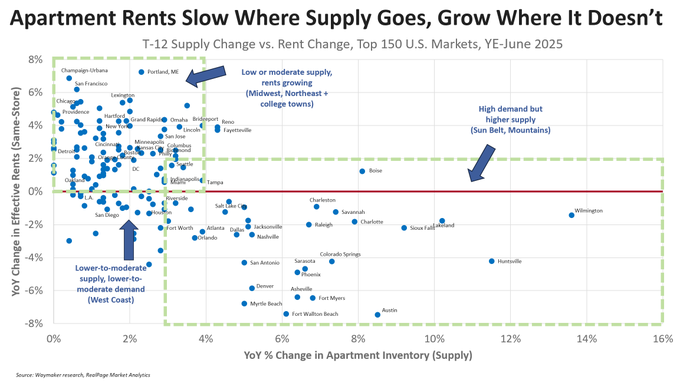
ADUs
- East Toronto garden suite dispute puts focus on city’s notification rules – Beach Metro Community News
- Affordable Housing — in the Backyard – The Current
- Denver ADUs legalized citywide. How many could be built?
- NYC Poised to Legalize Tiny Backyard Homes and Other ADUs Across City – Business Insider
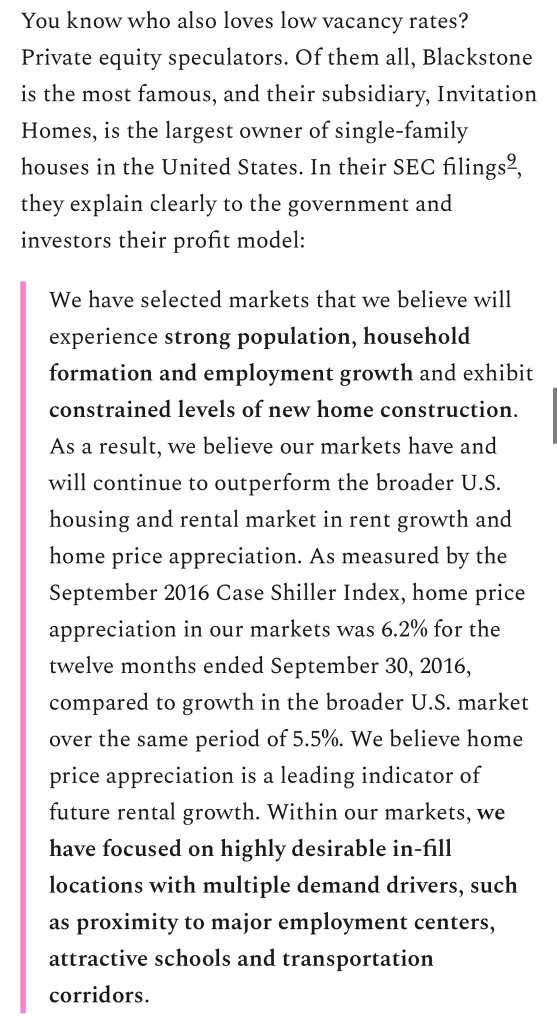
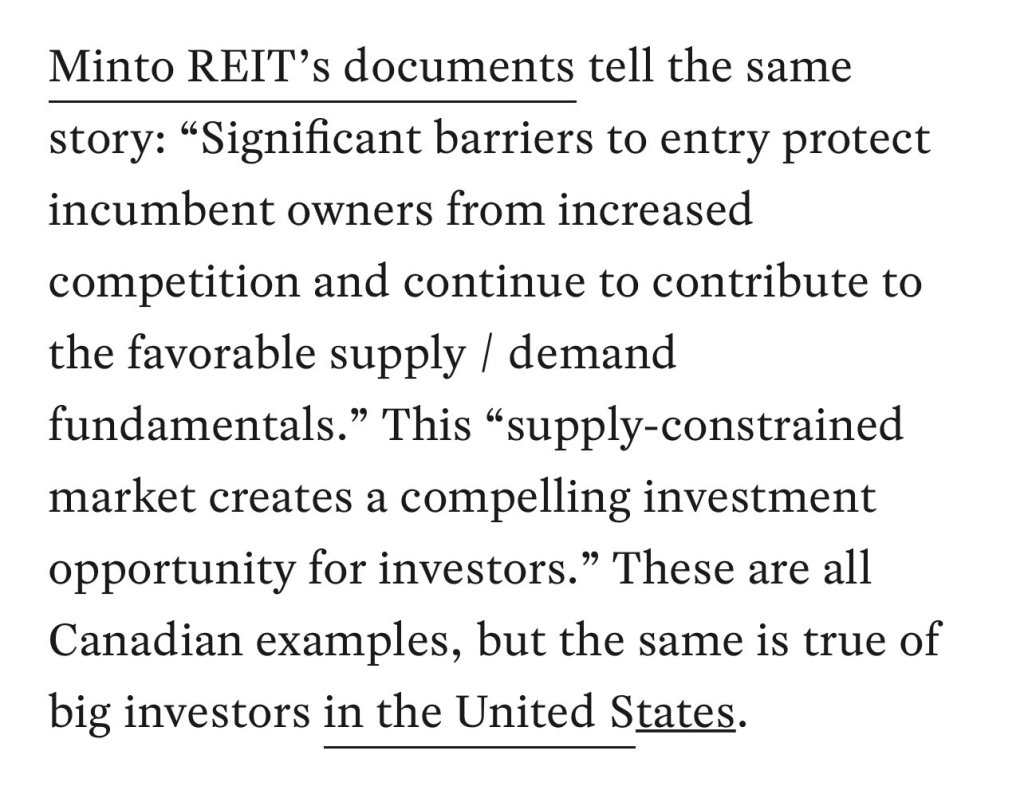
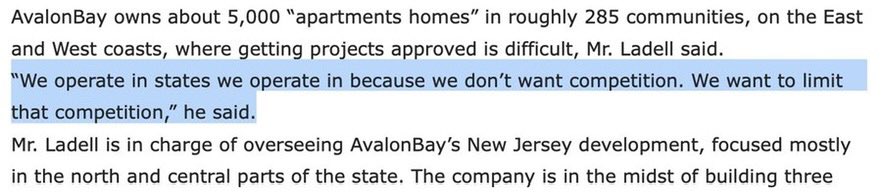
Private Equity

Cars, Culture, Walking & Biking
Cars
- Lowest-income households face highest transportation cost burden: federal report | Smart Cities Dive
- Lifetime Cost Of Small Car $689,000; Society Subsidizes This Ownership With $275,000
- Cars Have Fucked Up This Country Bad – by Hamilton Nolan
- We Need to Make Cities Less Car-Dependent | Scientific American
- LA’s Traffic Ordinance: 100 years on since cars got priority over pedestrians
- Why New York City is lowering its speed limit | Vox
- Tires Shed Millions Of Tonnes Of Microplastics Into The Environment
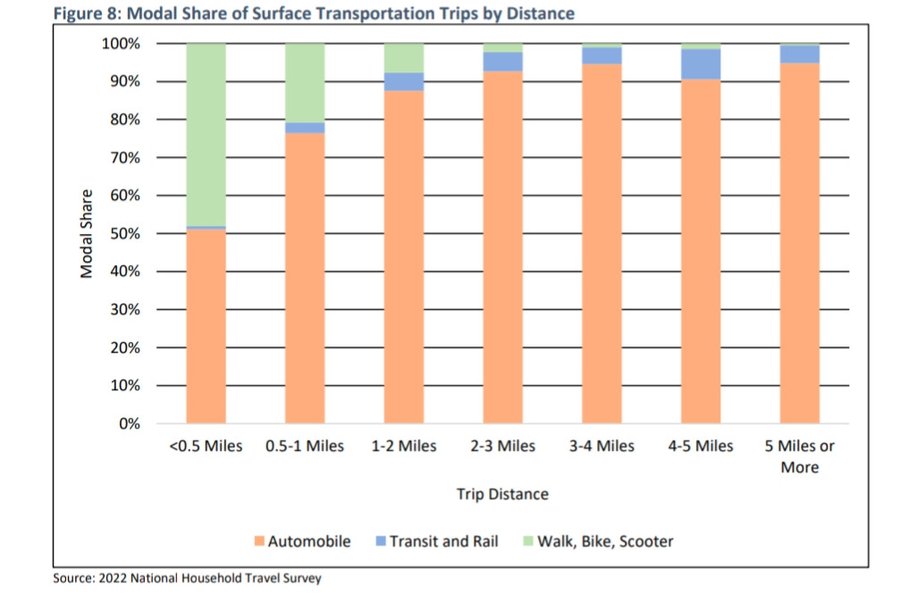
Not Cars

- Do bike lanes really cause more traffic congestion? Here’s what the research says | CBC News
- The Traffic Calming Effect of Delineated Bicycle Lanes – ScienceDirect
- Opinion | Stop complaining about bike lanes; they save lives

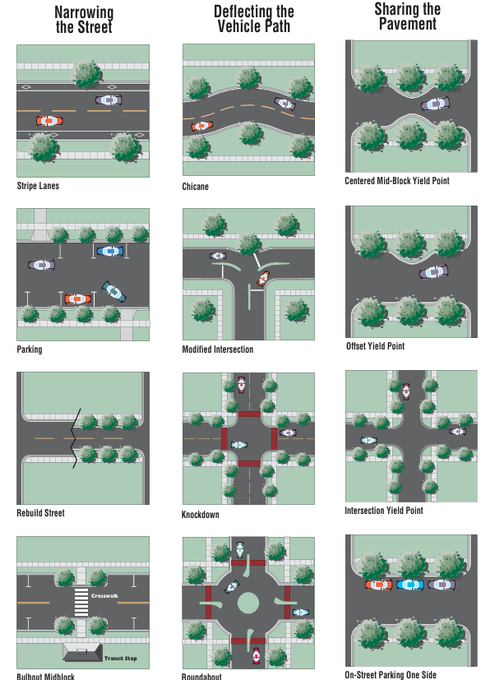
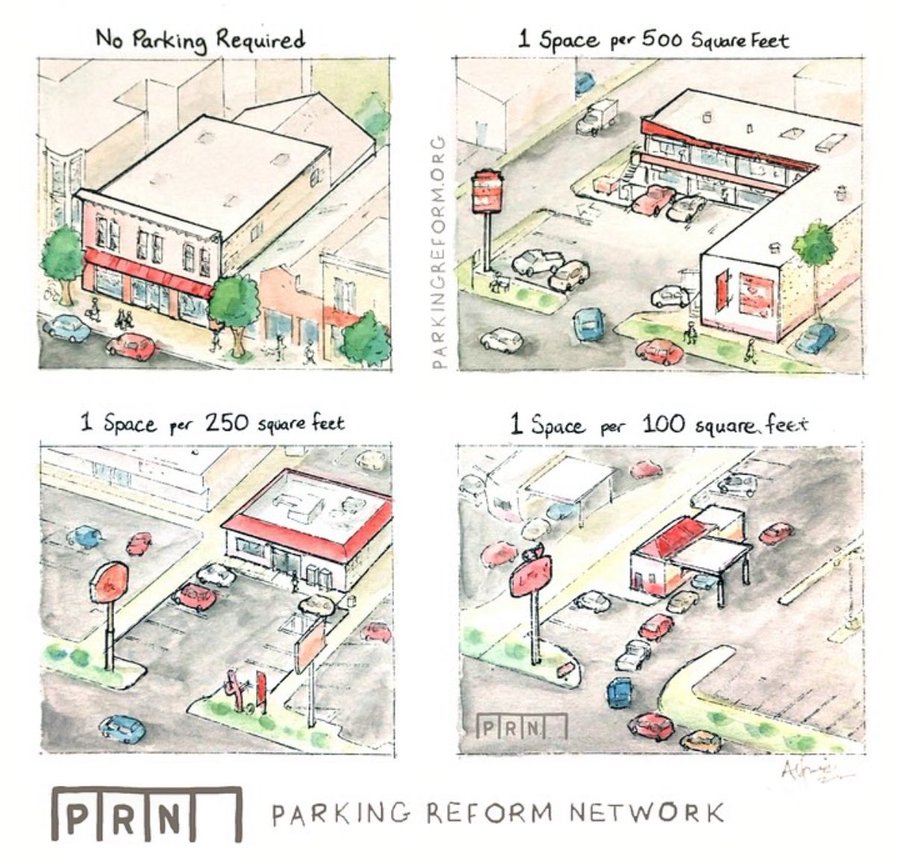
Parking and Housing are Inextricably Linked
- What a Giant Hole Says About a Broad Parking Problem – The New York Times
- New Bill in Congress Could Eliminate Parking Minimums, Allowing More Housing
- Op-ed: Removing parking mandates is a plausible trade off to increase affordable housing
- New law eliminates parking mandates, reduces housing costs | FOX21 News Colorado
- New Bill in Congress Could Eliminate Parking Minimums, Allowing More Housing
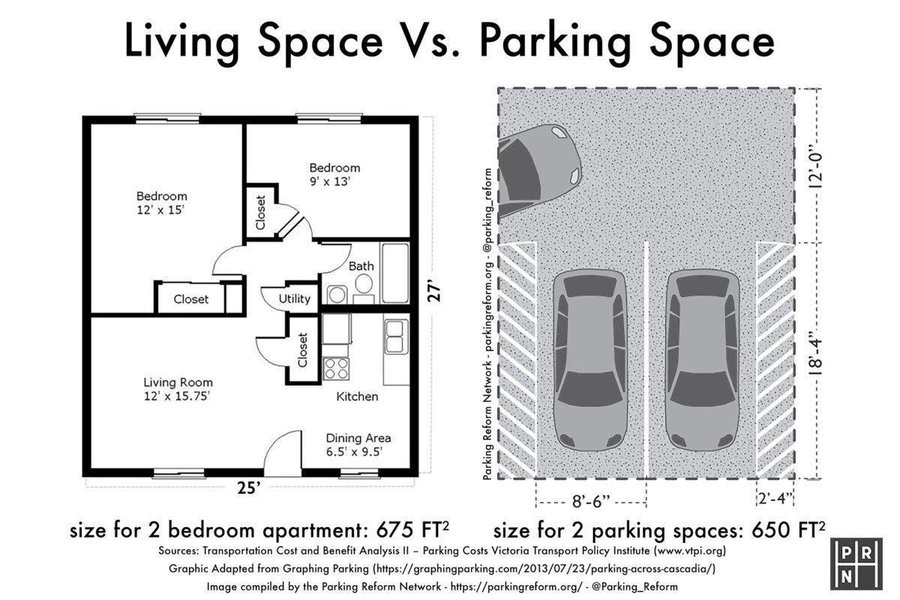
- Spokane Poised to Abolish Parking Mandates in Urbanist Reform Package – The Urbanist
- The End Days of Parking Requirements – by Aaron Lubeck
- What Happened When Buffalo Changed Its Parking Rules — Streetsblog USA
- Walkable, denser development can address both housing and traffic woes – CommonWealth Beacon
- Parking Mandates Map – Parking Reform Network
- Land Use Regulation as a Barrier to Entry: Evidence from Minimum Parking Requirements in Retail and Local Services
- Opinion: Denver Parking Minimums Increase Housing Costs | Westword
“…cities aren’t throwing out parking altogether. They’re just refusing to let it dictate the shape of every new building, block, or neighborhood. As Bothell’s mayor put it, “I want there to be more Bothell in Bothell.””
Ditching Parking Mandates- Strong Towns
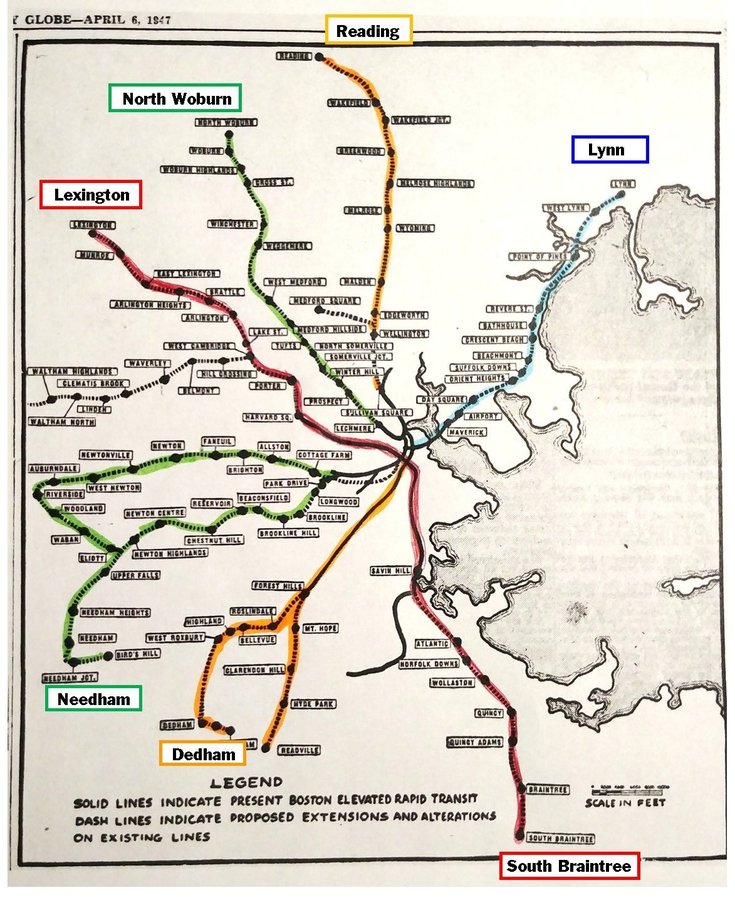
Community Building
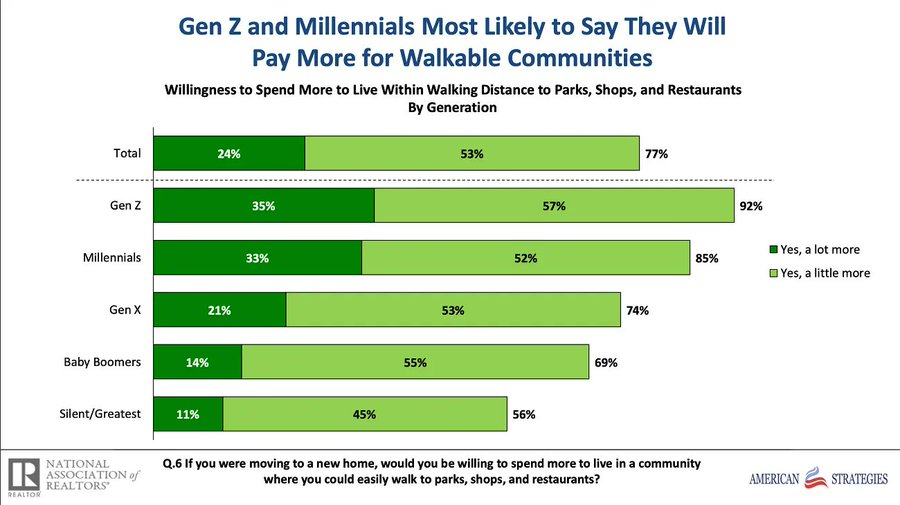
- For Walkable Neighborhoods, We Need More Useful Businesses
- Walkable, car-free Fort Bend development sees booming popularity
- “Third places” as community builders
- James Howard Kunstler: The ghastly tragedy of the suburbs | TED Talk
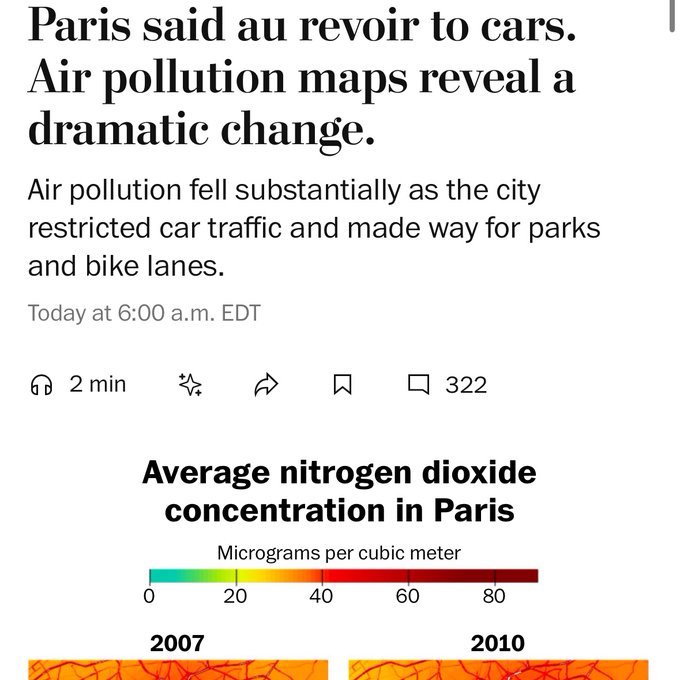

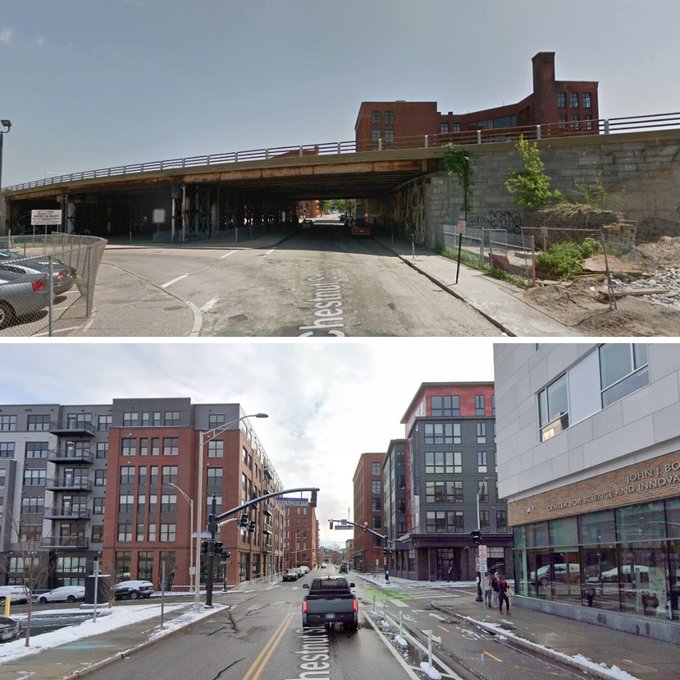
Air pollution has dropped significantly in Paris the last 15 years. Mayor Anne Hidalgo’s leadership has traded car space for green space, safe bike space, kid space…and traded pollution for people.
The Hudson Valley
- Is There Room for Lower Incomes? – The Current
- Affordable Housing – in the Backyard– The Current
- Beacon considers rezoning, redeveloping Route 52 corridor
- Kingston Welcomes New Zoning Code. It Has Advocates To Thank For That.
- Hudson Valley Towns Have a Big City Problem: The Rent Is Way Too High – The New York Times
- Westchester County Housing Needs Assessment
- Affordability is worsening in the Hudson Valley
- Westchester County Launches Housing Flex Fund Program to Provide Loans for Affordable Housing Developments – River Journal Online
- Stabilized apartments: Will Westchester raise rent after NYC vote?
- The Center for Housing Solutions – Hudson Valley Pattern for Progress
- Hudson Valley Pattern for Progress – Our mission is to promote regional, balanced and sustainable solutions that enhance the growth and vitality of the Hudson Valley.
Politics, Policies in Practice
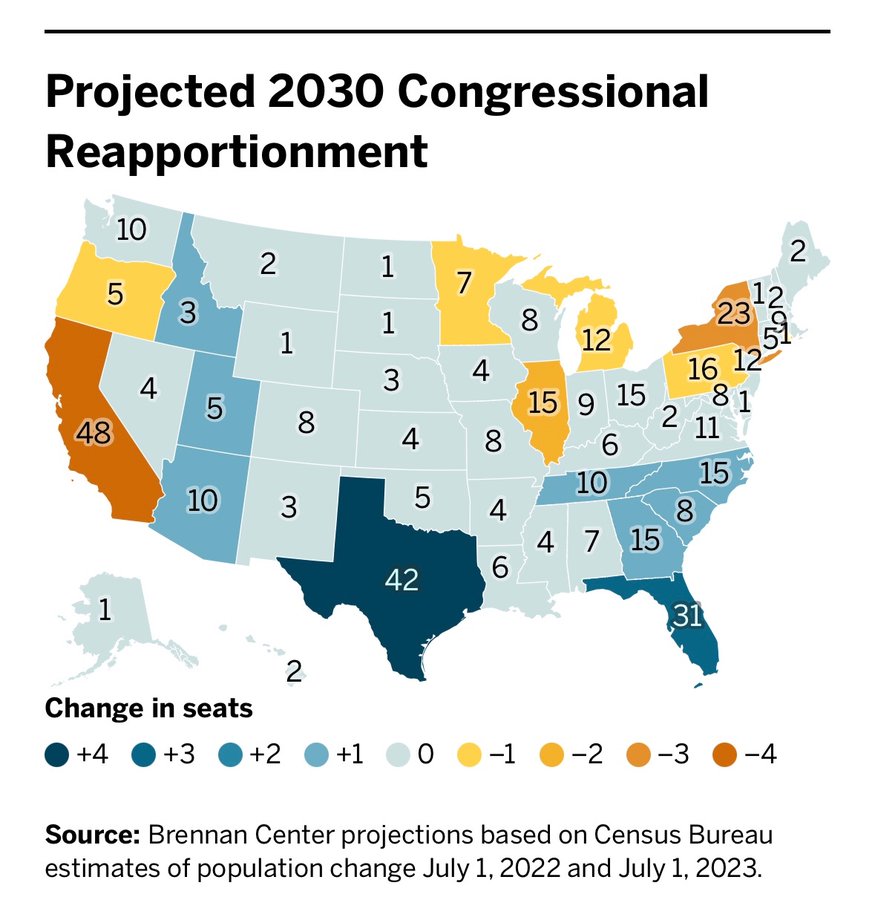
- Democrats Have a Problem Much Bigger Than Donald Trump – Newsweek
- How Zoning Ruined the Housing Market in Blue-State America – WSJ
- Swing states’ home prices rising faster than the rest of U.S. – The Washington Post
- Do Democrats Need to Learn How to Build? | The New Yorker
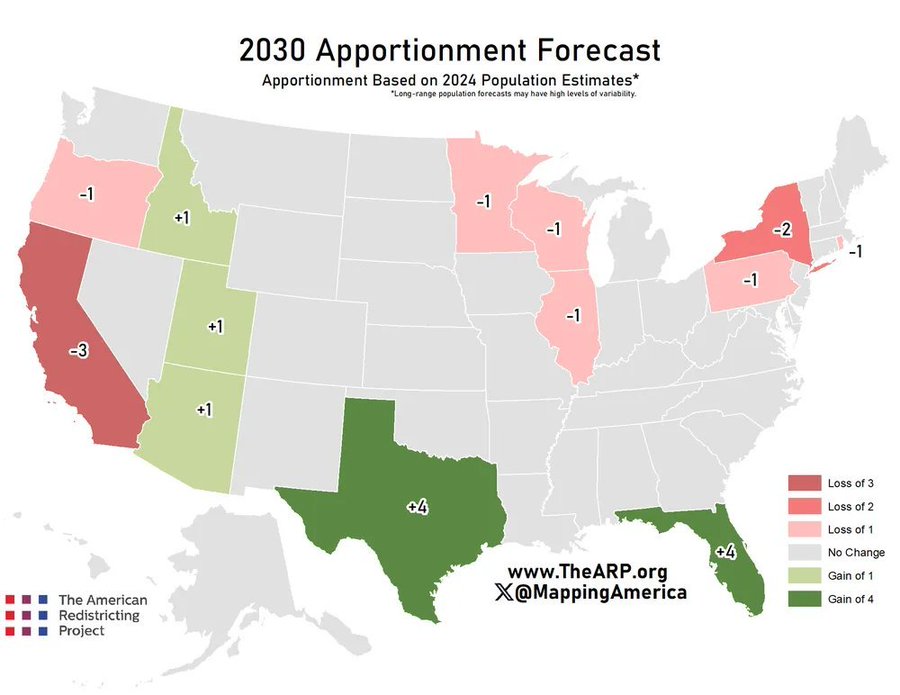
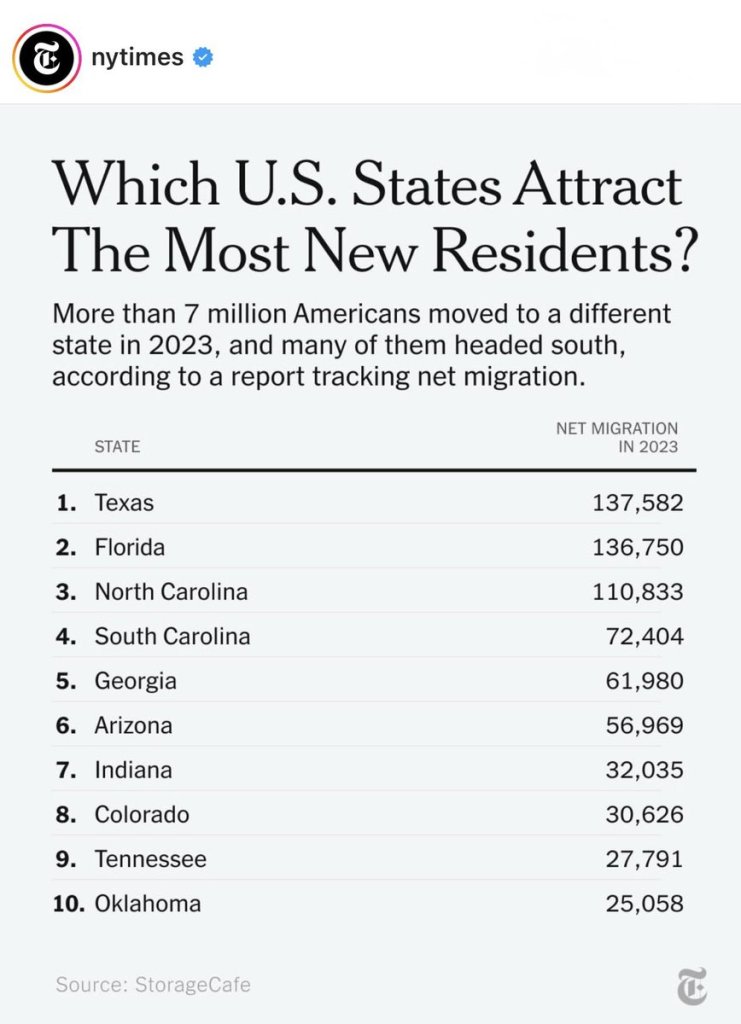
New York State…
“Democrats face a simple truth: Without decisive action on housing, New York will continue losing residents, power, and most of all, federal funding. The time to act isn’t next year or after the next election – it’s now, before it’s too late.”
When residents leave, power follows – City & State New York
- How New York Politicians Are Making A Second Trump Term More Likely
- Major Democratic State Faces Devastating Population Bomb
- The Trillion-Dollar Implications Of New York’s Housing Shortage
- Left Hand Meet the Right Hand: New York’s Failure to Implement Transit-Oriented Development – Building the Skyline
- New York Doesn’t Have Enough Housing. Why Is It So Expensive to Build? – The New York Times
- Local Zoning, Regional Needs – A Regional Review of How New York State and its Neighbors are Handling the Housing Crisis – Hudson Valley Pattern for Progress
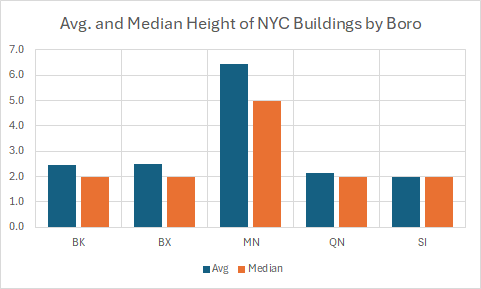
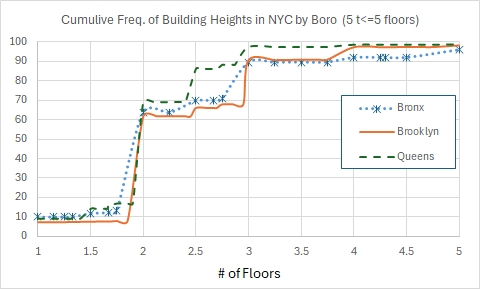

…And Beyond
- Here’s how Gov. Spencer Cox proposes tackling the state’s housing crisis
- What I learned from covering California’s homeless since 1980 – Los Angeles Times
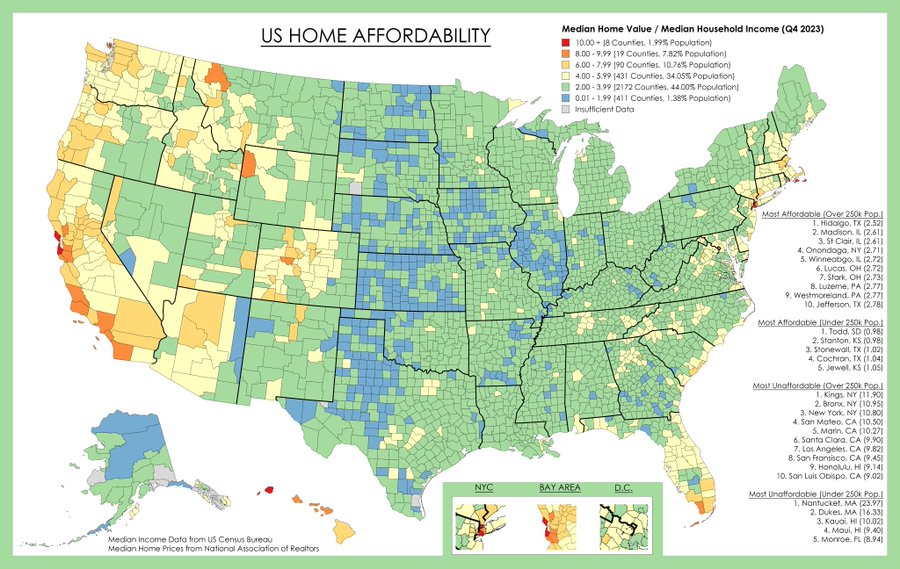
- “Cities are in a competition with each other to change for the better, and being an early mover will pay dividends.”
- Cambridge City Councilor Burhan Azeem pushes for more housing
- Proposal to Abolish Single-Family Zoning in Cambridge Moves Forward | News | The Harvard Crimson
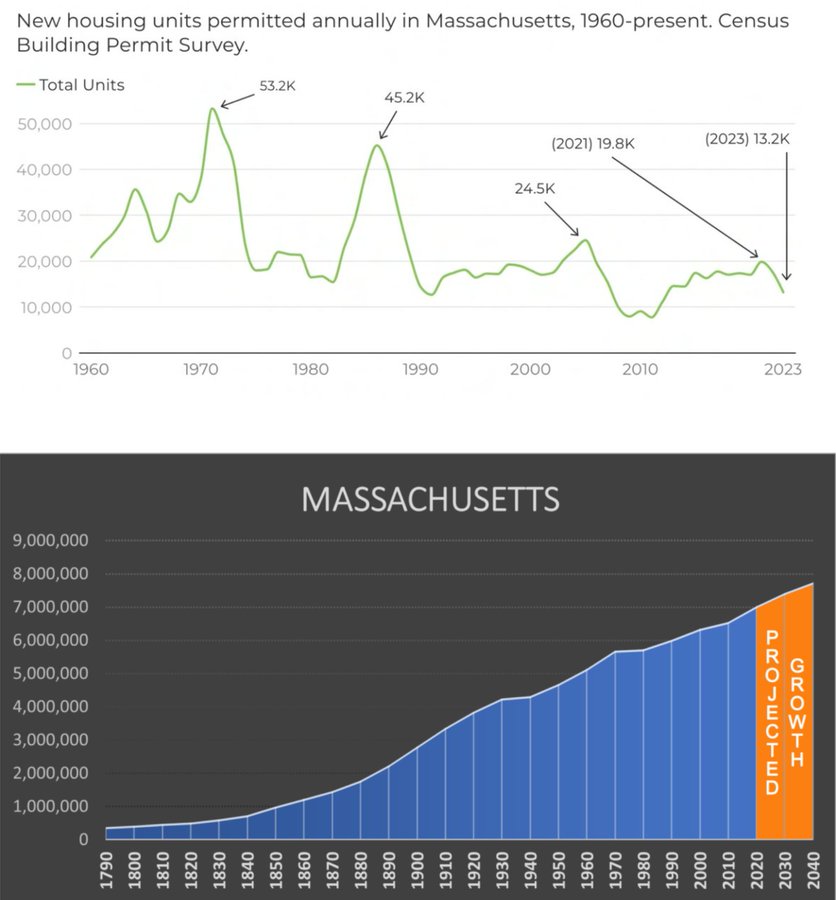
- A ‘cowboy ski town’ where high earners can’t afford a home faces a housing battle
- Zoning for Housing/Housing for All | City of Alexandria, VA
- City of Seattle Prevails Against Housing Growth Plan Appeals – The Urbanist
- Columbus City Council approves major zoning changes to applause
- Ireland’s housing crisis forces a third of residents to consider leaving | Fortune Europe
- Councils will be forced to build homes to fix England’s housing crisis, says Starmer | Housing | The Guardian
- Some rents have stopped rising since Berkeley’s construction boom
- Apartment Boom in Denver Market Delivers Record Rent Decline
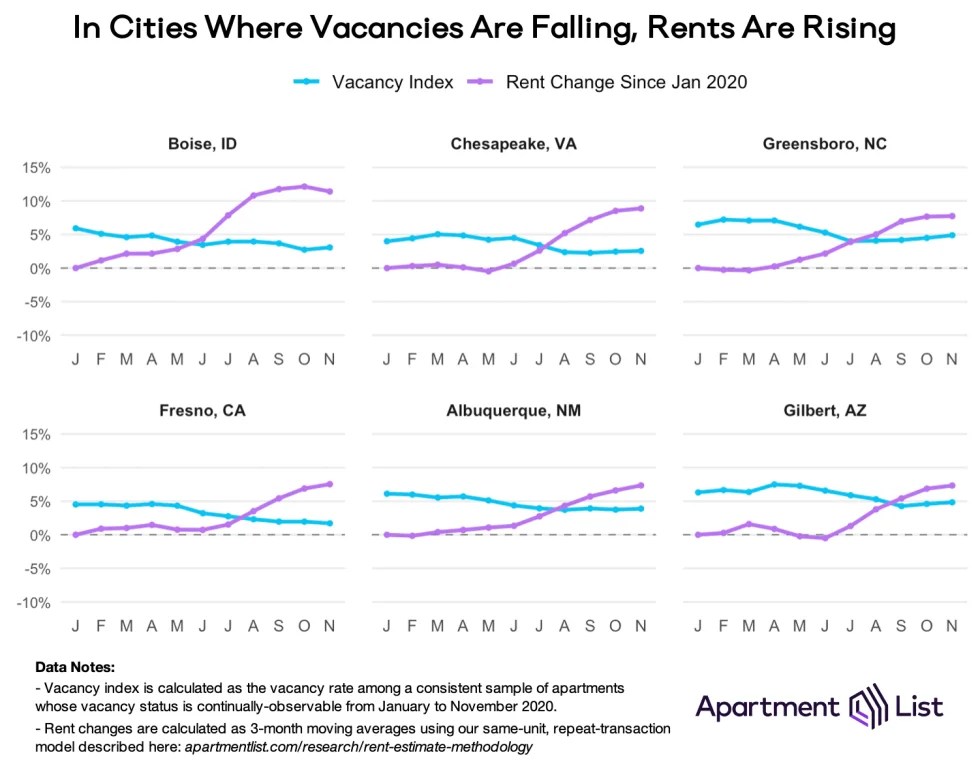
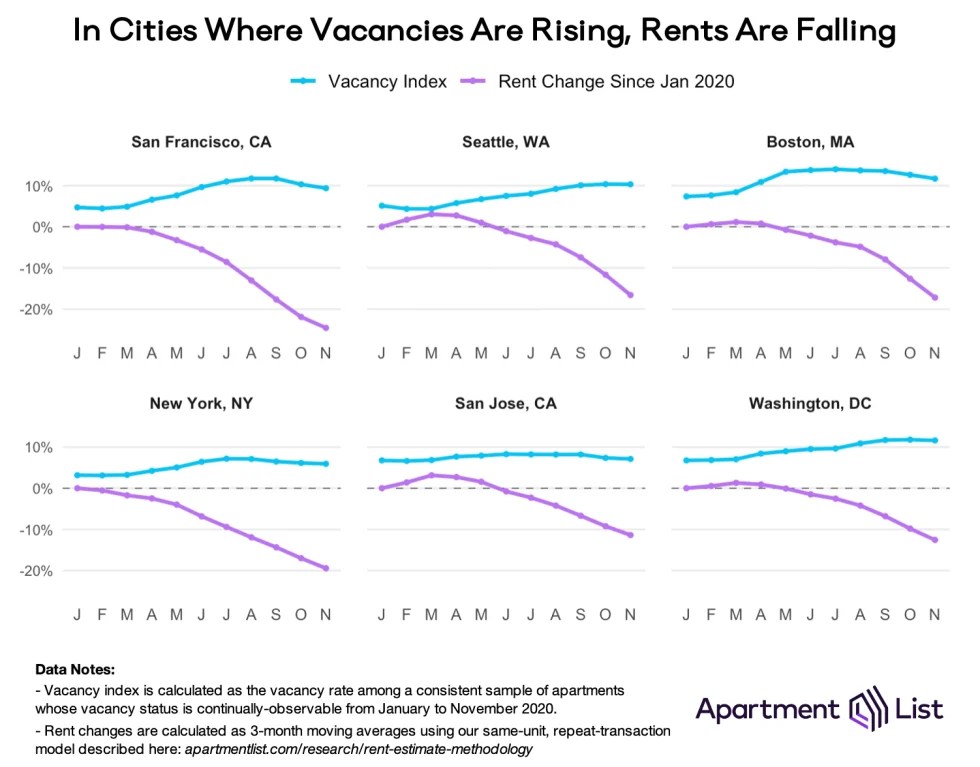
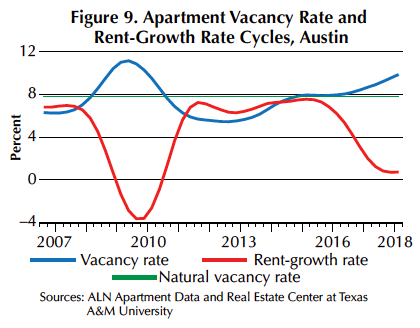
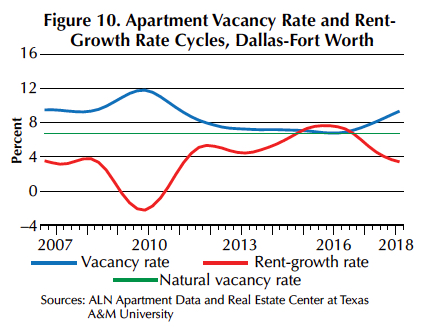
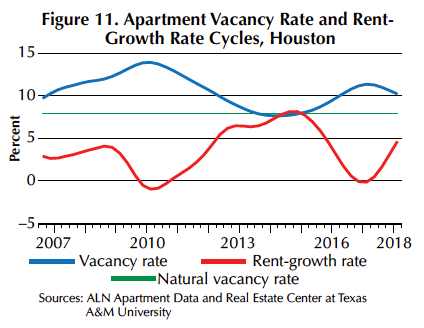
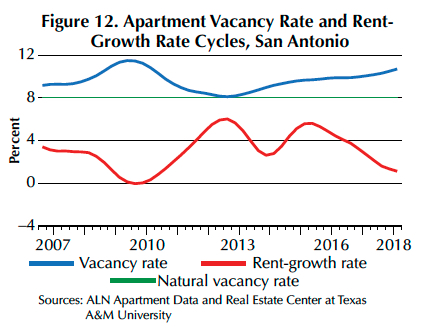
What are these eight graphs telling us?
When vacancy rates are low, rent growth is high; when vacancy rates are high, rent growth is low (or negative). To lower housing costs for your community, build more housing.
Taxes and Finance
- Housing Is The Economy – by Hamilton Nolan
- ‘We Just Can’t Take This Anymore’: Montana Man, 68, Begs for ‘Moratorium on Property Taxes’ After His Bill Reaches $8K a Year Just ‘To Live in Our Own House’ | Moneywise
- Marblehead homeowners stunned by ‘outrageous’ tax hikes – Marblehead Current
- Denmark Made Home Buying Easier. America Should Follow Its Lead. – Business Insider
- Priced Out of Housing, Communities Take Development Into Their Own Hands – The New York Times
Winning Strategies, Bridging the Political Divide
- Tim Walz is a YIMBY. He’s supported a ton of new housing that’s kept rents down in Minnesota.
- YIMBY Democrats for America
- The YIMBYs are coming — to Congress – POLITICO
- Housing crisis sparks bipartisan interest in efforts to override local zoning codes • New Hampshire Bulletin
- Reforming Permitting Requirements to Lower the Cost of Building New Housing and Increase Housing Affordability | CEA | The White House
- LISTEN: Radio Abundance — YIMBY Democrats for America
- Chamber of Progress Urges Democrats To Get Serious About Cost of Living In New Policy Roadmap – Chamber of Progress
- Alexandria mayoral candidates spar on Zoning for Housing, Potomac Yard arena and taxes | ALXnow
- Alyia Gaskins wins Alexandria’s mayoral Democratic primary | ALXnow
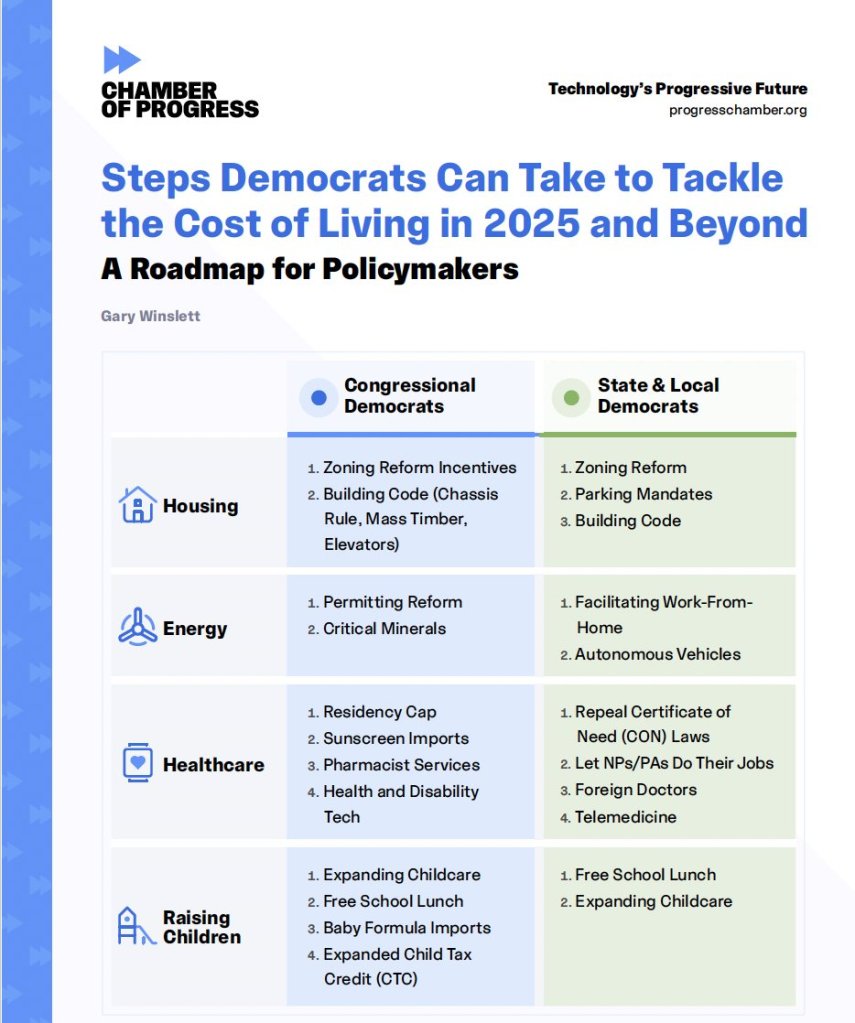
“People who claim to be progressives but resist efforts to solve the housing problem are hurting their own stated values—and risking their descent into political irrelevance.”
The Biggest Myth About the YIMBY Movement – The Atlantic
Published Papers, Studies, Data
Housing Affordability, Supply, Market Rate
- What Really Drives Housing Prices? — Kasey Klimes
- New Market-Rate Housing and Housing Affordability
- State of the State’s Housing- Oregon Housing and Community Services
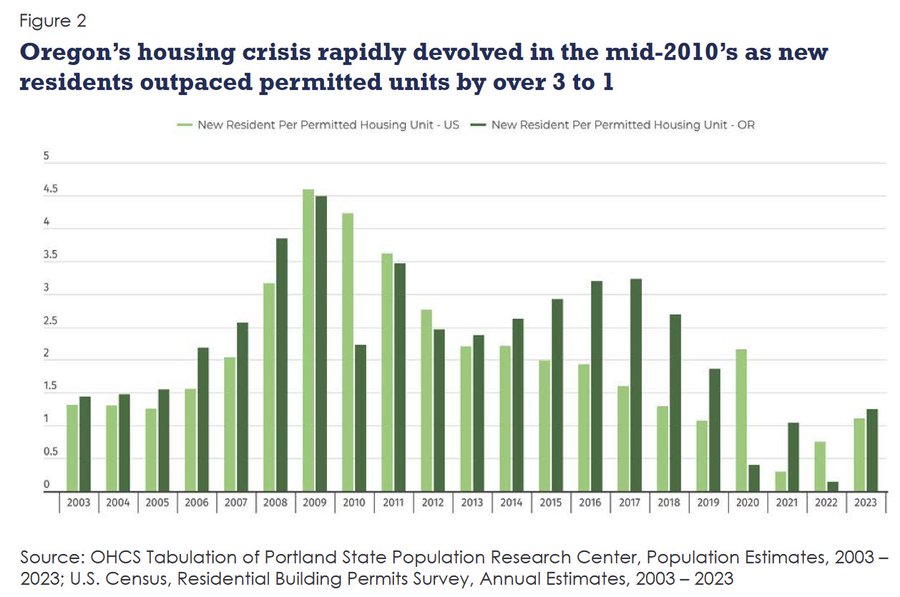
- Supply Skepticism: Housing Supply and Affordability: Housing Policy Debate: Vol 29, No 1 (ABSTRACT)
- Supply Skepticism: Housing Supply and Affordability (FULL)
- Supply Skepticism Revisited by Vicki Been, Ingrid Gould Ellen, Katherine M. O’Regan :: SSRN
- JUE Insight: The effect of new market-rate housing construction on the low-income housing market – ScienceDirect
- The affordability impacts of new housing supply: A summary of recent research – London Datastore 2023
- Does new housing for the rich benefit the poor? On trickle-down effects of new homes by Gabriella Kindström, Che-Yuan Liang :: SSRN
- The Effect of Market-Rate Development on Neighborhood Rents- UCLA Lewis Center for Regional Policy Studies
- exclusionarybydesign_report_nov_8.pdf
- Westchester County Housing Needs Assessment
- Reducing the Burden: Increasing Housing Supply to Lower Housing Costs
- How Even Luxury Housing Can Help Solve the Housing Shortage
- JUE Insight: City-wide effects of new housing supply: Evidence from moving chains – ScienceDirect
- Housing Supply and Housing Affordability | NBER
Land Use, Zoning
- Land Use Regulation as a Barrier to Entry: Evidence from the Texas Lodging Industry by Junichi Suzuki :: SSRN
- Dispelling myths: Reviewing the evidence on zoning reforms in Auckland – ScienceDirect
- Why Has Construction Productivity Stagnated? The Role of Land-Use Regulation by Leonardo D’Amico, Edward L. Glaeser, Joseph Gyourko, William Kerr, Giacomo A. M. Ponzetto :: SSRN
- Urbanism 101: Zoning’s History and Role in the Housing Crisis – The Urbanist
- Land Use Regulation as a Barrier to Entry: Evidence from Minimum Parking Requirements in Retail and Local Services
- Dispelling myths: Reviewing the evidence on zoning reforms in Auckland – ScienceDirect
- Small Single-Stairway Apartment Buildings Have Strong Safety Record | The Pew Charitable Trusts
- A universal framework for inclusive 15-minute cities | Nature Cities
- Brookings- Diverse neighborhoods are made of diverse housing
- Upzoning and gentrification: Heterogeneous impacts of neighbourhood-level upzoning in New York City – Minjee Kim, Hyojung Lee, 2024

Transportation, Parking
- The High Cost of Free Parking- Daniel Shoup- Journal of Planning Education and Research 1997
- Transportation Economic Trends: Transportation Spending – Average Household | BTS Data Inventory
- Car tyres shed a quarter of all microplastics in the environment – urgent action is needed | University of Portsmouth
- Daylighting Law: San Francisco eliminating 14,000 parking spaces as CA’s new rule takes effect; here’s what it means | abc7news.com
- The Traffic Calming Effect of Delineated Bicycle Lanes – ScienceDirect
- Dude, Where’s My Parking Mandate? Chicago Says You Don’t Need One (with interactive map)
- Skinny roads save lives, according to a study on the width of traffic lanes : NPR
Additional Resources
“Housing policy is inextricable from social, economic, and environmental policy.”
- Close.city is a great resource for gauging your proximity to amenities in your community.
- Strong Towns
- LISTEN: The Strong Towns Podcast | Strong Towns
- RIP2 (Residential Infill Project) project documents | Portland.gov
- Walkable communities connecting neighbors, local businesses, and all that cities have to offer | Culdesac
- Our Bold Vision – UpForGrowth.org
- National Low Income Housing Coalition
- AARP Future Of Housing
- AARP Livable Communities – Inspiration and Information for Local Leaders
- AARP Livable Communities – A Handbook for Improved Neighborhoods
- On the Housing Crisis a book by Jerusalem Demsas – Bookshop.org US
- From Crisis to Transformation, A Report from the National Housing Crisis Task Force
- LISTEN: Radio Abundance — YIMBY Democrats for America
- Housing Lab – The Knowledge Platform for the Housing Market
- Create Streets Ltd | Design practice, town-builder and think tank.
- Parking Reform Network
- Market Urbanism – Liberalizing cities | From the bottom up
- Six housing ideas that can help tackle the housing crisis | Vox
- Japanese Housing Policy… – UCLA Housing Voice – Apple Podcasts
In Closing

-Marques King, RA, NCARB
Remember…
Your Support Matters.
If you find the ‘Healthy Communities’ compilation to be a resource to you in some way, please consider showing your appreciation.
Make a monthly donation
Make a yearly donation
Choose an amount
Or enter a custom amount
Your support helps me continue to curate this space, and devote more time to writing and speaking out on this incredibly important issue affecting us all. Thank you!
Your contribution is appreciated.
Your contribution is appreciated.
DonateDonate monthlyDonate yearlyDisclaimer
I am passionate about finding effective, meaningful ways to address the housing, affordability, and social crises we’re facing but have only curated this content. Absolutely none of the writing, images, or research are mine. I didn’t even compose most of the captions (just some light editing for clarity).
 Thee Brian O